Four Portfolio Archetypes for Product Designers, & How to Choose the Right One
Some product designers don’t struggle because they lack ability. They struggle because their portfolio tries to do too much. Knowing what not to present is just as important as knowing what to present.

Intro:
The Real Portfolio Problem
Hiring managers and clients rarely want to see everything you’ve ever made. They want to see your best work, clearly framed, without distractions. In practice, a small number of strong projects often does more work than a larger set of average ones. Tightening a portfolio down to two well-presented projects can be more effective than showing a broader but weaker body of work.
This is where many portfolios go wrong. Not because the work is weak, but because the structure doesn’t help the viewer understand who the designer is right now and what they should be hired for.
Different designers are at different stages. Some need a simple, focused portfolio that gets out of the way. Others need room for personality, process, or volume. Trying to solve all of those needs with a single layout usually leads to compromise.
That’s why it’s useful to think in terms of portfolio archetypes. Not styles, but clear approaches to presenting work, each optimized for a different goal.
Below are four portfolio archetypes for product designers, and how to choose the one that fits where you are today.
Archetype #1:
The Foundational Portfolio
This archetype is about getting out of the way.
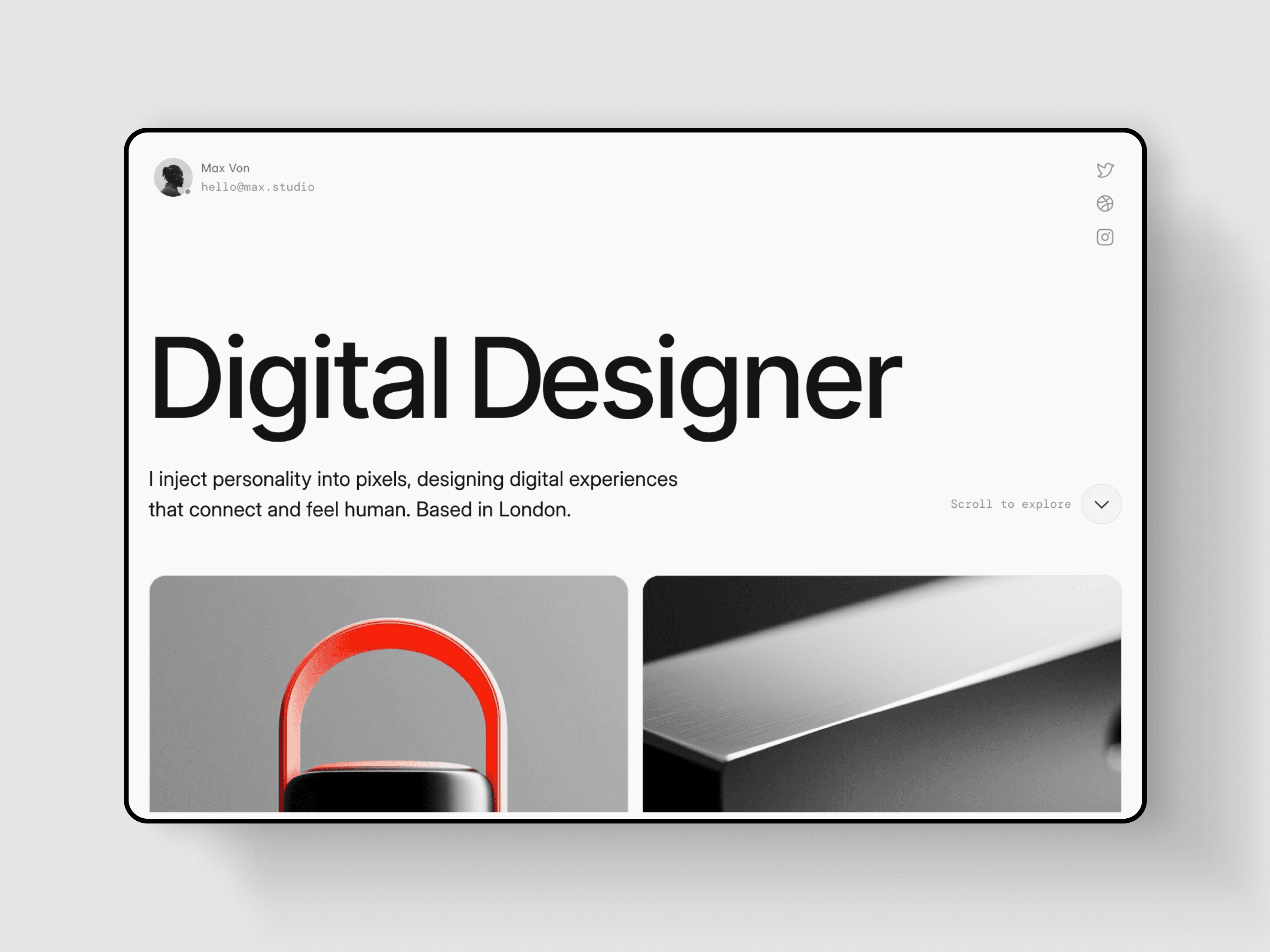
MaxFolio is designed for product designers who need a portfolio that does one thing well: present their work clearly, without interpretation, decoration, or excess structure. It’s especially suited for early-career designers, designers applying to full-time roles, or anyone who wants their projects to speak for themselves.
The layout assumes a simple truth. Reviewers don’t need persuasion at this stage. They need clarity. What did you work on, what was your role, and what problem were you solving. Anything that competes with that signal tends to weaken it.
That’s why this type of portfolio focuses on:
a straightforward project list
a clear about section with experience and background
testimonials that point outward, not inward, via LinkedIn
a résumé that’s easy to access, not hidden behind storytelling
There’s no pressure to brand yourself here. No requirement to show personality through motion or visuals. The structure encourages restraint. If you only have two or three strong projects, that’s not a weakness in this context. It’s an advantage.
This archetype works best when:
you’re optimizing for hiring, not clients
you want to avoid over-explaining
your work already stands on its own
MaxFolio being free isn’t the point. Its value comes from choosing not to add more than necessary.
Archetype #2:
The Expressive Professional
This archetype sits one step past correctness.
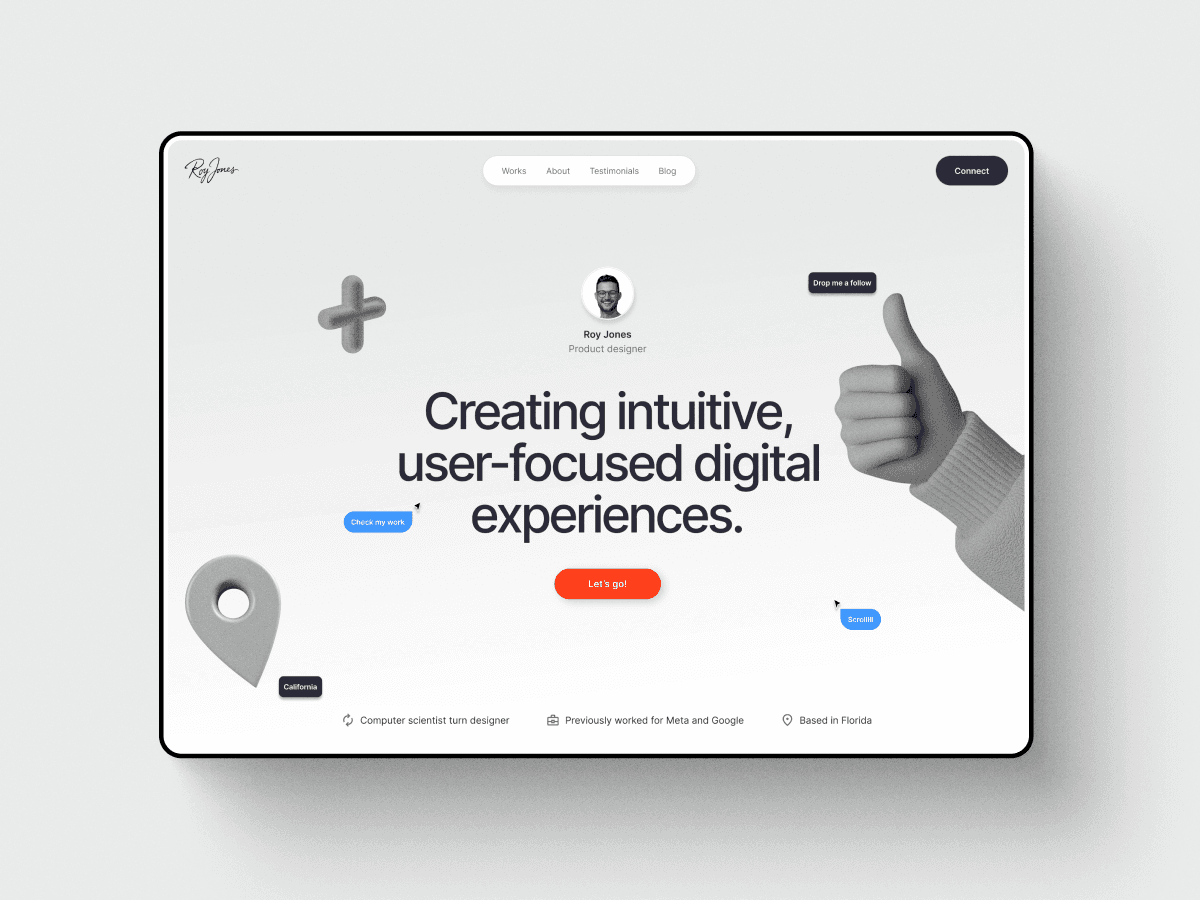
Royfolio is for product designers who already understand the basics and want to be remembered, without tipping into noise or self-indulgence. The work is still the focus, but the presentation starts to carry a point of view.
Expression here is intentional. Gently floating 3D elements, a looser rhythm, and a more playful tone introduce personality without overwhelming the content. It signals taste and confidence while still respecting the expectations of hiring managers and clients.
Structurally, Royfolio expands where it matters:
a concise about section that adds context, not autobiography
testimonials anchored to LinkedIn for credibility
a résumé section that can go deeper for those who care
a blog section for designers who want to show thinking, not just outcomes
The addition of a dedicated single-project page is key. This archetype assumes you want to guide the viewer through a product story, not just present screenshots. The layout supports explaining decisions, constraints, and results without feeling academic.
Strategic calls to action appear naturally at the end of projects. They’re subtle, but purposeful. This is what makes Royfolio work for both designers looking to get hired and those taking on freelance work.
This archetype works best when:
you want to stand out while staying professional
presentation matters as much as content
you’re open to multiple outcomes
Royfolio isn’t about being loud. It’s about being distinct.
Archetype #3:
The Studio Mindset
This archetype is about repositioning.
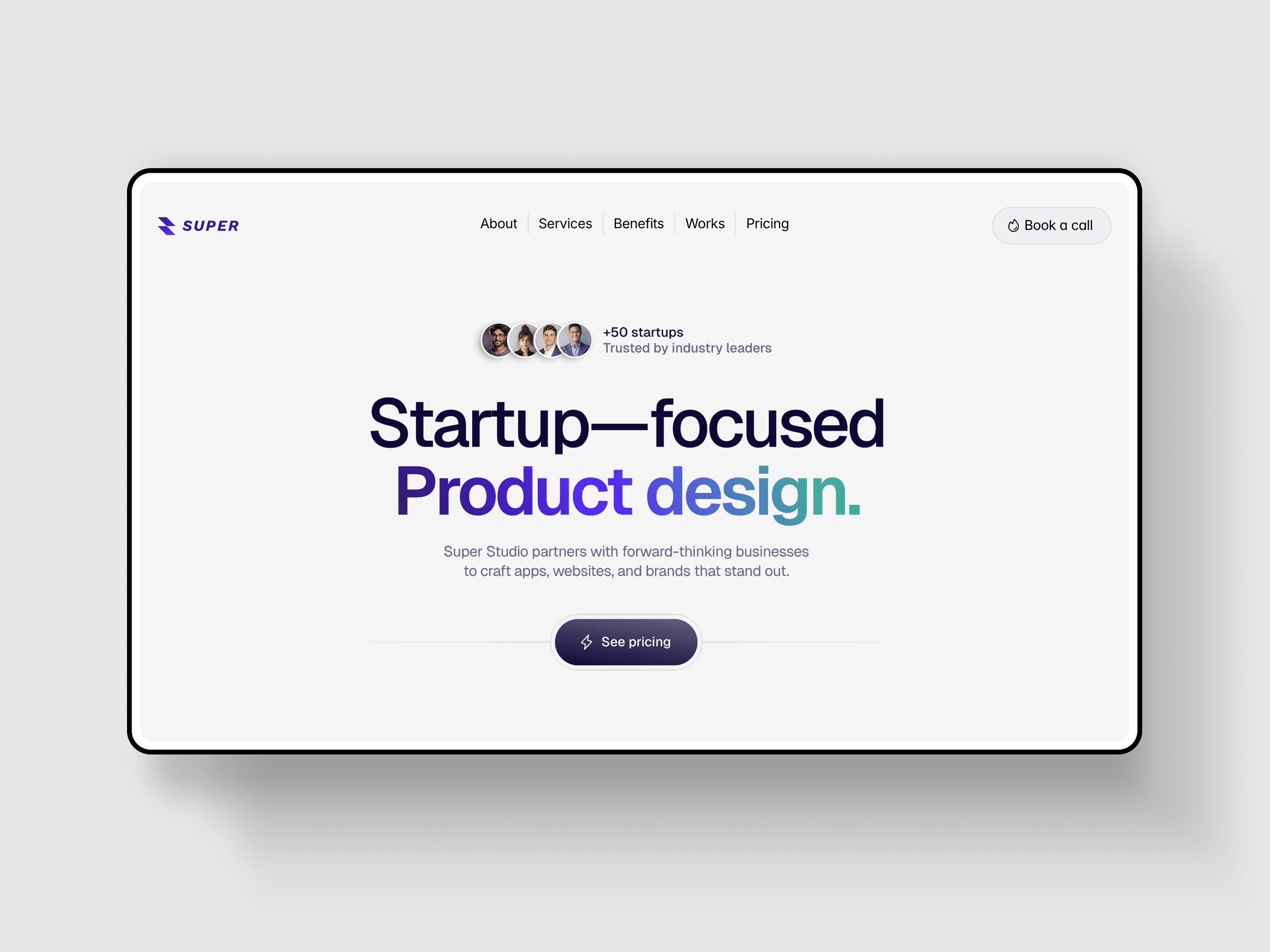
Super is not trying to be a traditional portfolio. It’s built for product designers who sell services and need to establish trust quickly. Whether you run an agency or work solo, the mindset is the same: you’re presenting yourself as a business, not just a practitioner.
The design language borrows from modern app interfaces. Clean, structured, and familiar to product-minded audiences. Nothing is ornamental. Everything earns its place.
Instead of leading with projects alone, Super layers credibility throughout the landing page:
testimonials and logos woven into the layout
a clear services section
benefits and process sections that reduce uncertainty
pricing and Q&A to remove friction
All of this lives on a single, compact page. That’s intentional. The goal isn’t exploration. It’s momentum. Visitors should never feel lost or tired while scrolling.
A detailed case study page exists for those who want depth. This is where process shows up as proof, not theory.
Calls to action are woven throughout the landing page at natural decision points. They guide users toward contact without interrupting the flow or turning the page into a hard sell.
This archetype works best when:
you’re primarily selling services
trust signals matter more than personality
clarity matters more than experimentation
Super is for designers who understand that perception and structure directly affect conversion.
Archetype #4:
The System Thinker
This archetype assumes scale.
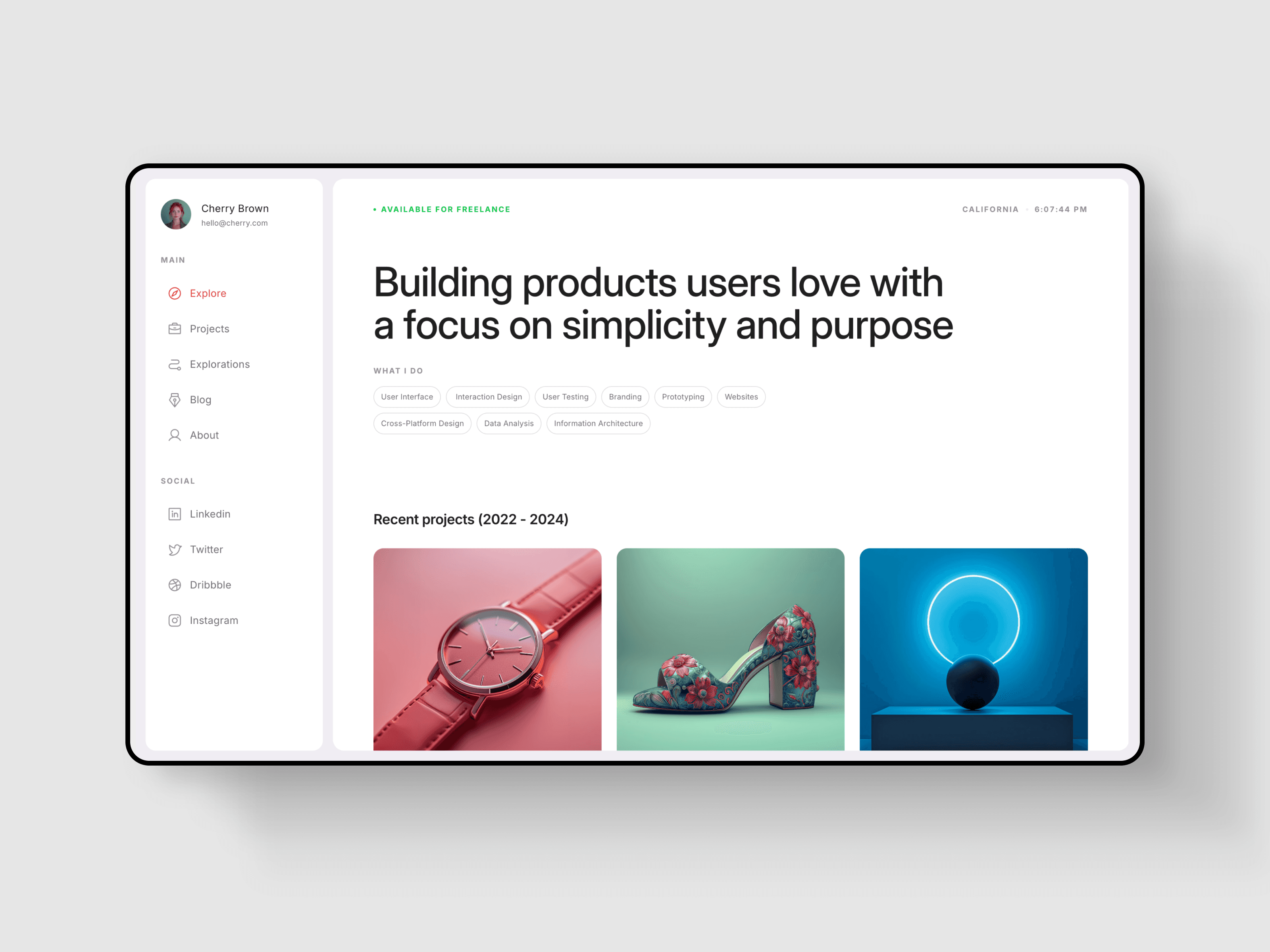
Cherryfolio is built for product designers with volume. More projects, more thinking, more output over time. The challenge here isn’t what to show. It’s how to organize it without overwhelming the viewer.
The dashboard-inspired layout reflects that goal. It feels closer to a product than a page. There’s structure, hierarchy, and a clear emphasis on recent work from the start. No matter how much content exists, the most relevant work stays front and center.
This archetype doesn’t try to simplify the designer. It assumes the viewer is willing to engage more deeply. Hiring managers, collaborators, and clients who want context will find it. Those who don’t still get immediate signal without friction.
Instead of a single projects page, CherryFolio introduces a dedicated project lobby. A place to browse, return to, and spend time. Archived work has a role, not to dilute focus, but to show continuity and growth.
Beyond the first impression, this structure attracts a different kind of attention. Founders, recruiters, and senior collaborators aren’t always looking to act immediately. Often, they’re scanning, remembering, and building mental shortlists. A system like this keeps you on their radar without requiring a pitch.
Over time, familiarity compounds. Not instead of clarity, but on top of it. People don’t just evaluate the work. They start to recognize the designer behind it.
This archetype works best when:
you want to make a strong first impression and remain memorable
you care about discoverability, not just conversion
you value depth, continuity, and long-term recall
CherryFolio isn’t about choosing between immediacy and longevity. It supports both.
How to Choose the Right Archetype (Without Overthinking It)
Choosing a portfolio structure doesn’t require a long decision process. It requires honesty about what you need right now.
The mistake most designers make isn’t picking the wrong template. It’s trying to solve for every possible future scenario at once. Portfolios work best when they’re optimized for a clear purpose, even if that purpose changes later.
A simple way to decide:
If you want clarity and correctness, start with the foundation.
If you want to be remembered without losing credibility, add expression.
If you’re selling services, lead with trust and structure.
If you’ve built volume over time, design a system that can hold it.
None of these are permanent states. They’re positions. You can move between them as your work, goals, and audience change.
The right archetype isn’t the most impressive one. It’s the one that removes friction for the person on the other side of the screen. When the structure aligns with intent, the work has room to do its job.
That’s when portfolios stop feeling heavy and start feeling effective.
Tom from Volt